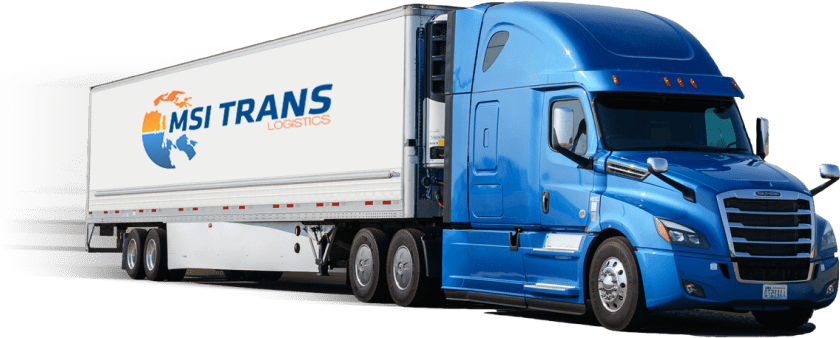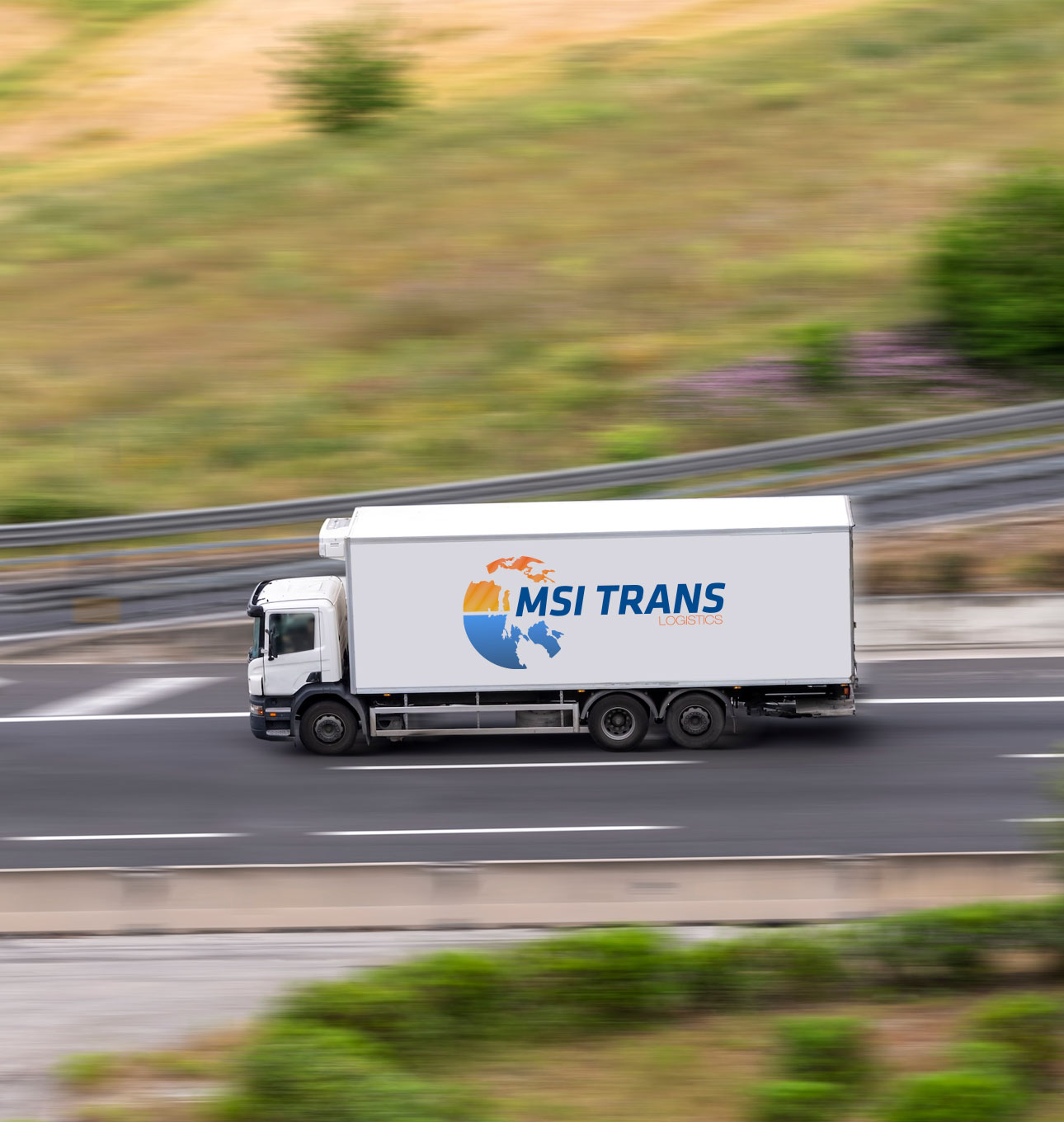



Full load transport services, also known as FTL transport, provide dedicated truck capacity for shipping freight where a single consignment occupies the entire vehicle without sharing space with other cargo. This method offers faster transit times, reduced handling risk and direct delivery from origin to destination.
FTL is the preferred solution for high-volume, time-sensitive or fragile shipments across domestic and international routes. Businesses that require consistent full truck load capacity benefit from scheduled departures, fixed pricing and guaranteed delivery windows.
What Are Full Load Transport Services?
Full load transport services assign an entire truck and trailer exclusively to a single shipper’s cargo. The vehicle collects freight at the origin, seals the doors and drives directly to the delivery address without intermediate stops, cross-docking or co-loading with other shipments.
This model serves industries that move large volumes on a consistent schedule. Automotive parts manufacturers, FMCG distributors and industrial equipment suppliers rely on full truck load transport to maintain production timelines. The dedicated vehicle ensures cargo remains untouched between loading and unloading.
The operational advantages that define full load transport include:
- Direct routing. The truck follows the shortest permitted path between origin and destination. No consolidation hubs, no deconsolidation points and no waiting for other shippers’ cargo to fill the trailer.
- Reduced handling exposure. Freight stays on the same trailer from first load to final delivery. Every additional touch point in logistics increases the probability of damage. FTL eliminates all intermediate handling stages.
- Fixed scheduling. Shippers and receivers agree on exact collection and delivery windows. The dedicated vehicle departs on the confirmed date and arrives within the committed timeframe.
- Higher payload capacity. A standard European trailer offers 33 pallet positions and approximately 86 cubic metres of cargo space. Full load shippers access this entire volume without competing for space.
How Does FTL Transport Work?
FTL transport follows a streamlined sequence that connects the shipper’s warehouse directly to the receiver’s facility. The process starts with a booking confirmation that locks the vehicle type, collection date and delivery window.
On the scheduled day, the assigned truck arrives at the origin warehouse. Loading crews place all cargo according to the weight distribution plan and secure items with straps, blocking materials or load bars. The driver seals the trailer and records the seal number on the CMR consignment note.
The vehicle then travels the planned route without intermediate stops. For international FTL movements, the driver carries all customs documentation prepared in advance. Border crossings on established corridors clear efficiently when paperwork matches the physical cargo exactly.
At the destination, the receiver checks the seal integrity before unloading begins. The delivery team verifies item counts against the consignment note. Any discrepancies trigger an immediate notation on the proof of delivery document. This direct chain of custody from origin seal to destination check gives shippers full visibility over their freight.
Full Truck Load Capacity and Vehicle Types
Selecting the right vehicle type directly affects both cost efficiency and cargo protection. European road freight operates with several standard trailer configurations, each suited to different cargo profiles.
The standard curtainsider (tautliner) trailer measures 13.6 metres in length and accepts up to 33 euro pallets. Side curtains open fully for forklift access from both sides, making this the most versatile option for palletised industrial freight. Maximum payload typically reaches 24 tonnes.
Mega trailers offer an internal height of 3 metres compared to the standard 2.7 metres. This extra vertical space adds roughly 10 cubic metres of usable volume. Lightweight consumer goods, automotive components and voluminous packaging benefit most from this configuration.
Box trailers provide a fully enclosed, rigid cargo compartment. The sealed structure protects freight against weather, dust and tampering. Electronics, pharmaceutical raw materials and high-value consumer goods travel in box trailers when security takes priority over loading flexibility.
Refrigerated trailers maintain controlled temperatures from deep freeze at -25°C to chilled at +2°C to +8°C. These vehicles serve cold chain logistics operations carrying food, beverages and temperature-sensitive chemical products.
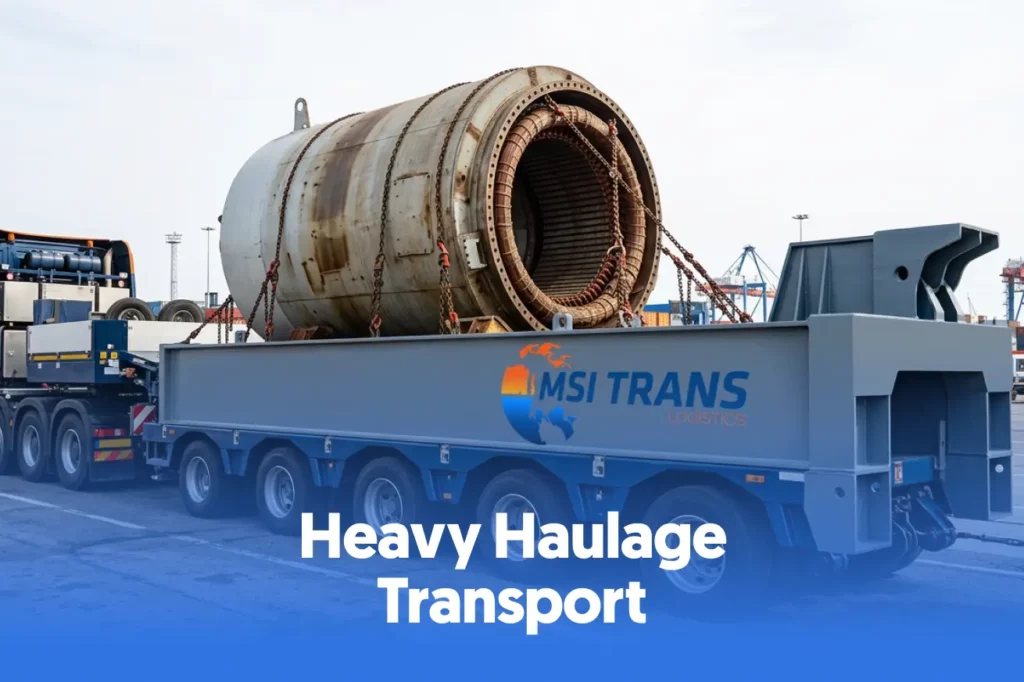
Flatbed and lowboy trailers handle oversized or heavy haulage cargo that exceeds standard trailer dimensions. Steel coils, construction equipment and industrial machinery travel on open platform configurations with dedicated securing systems.
What Is the Difference Between FTL and LTL?
Choosing between full load and part load truck transport services depends on shipment volume, urgency and budget. The two models serve fundamentally different logistics needs.
| Factor | FTL (Full Truck Load) | LTL (Less Than Truck Load) |
|---|---|---|
| Vehicle usage | Entire trailer for one shipper | Shared space among multiple shippers |
| Transit time | Faster, direct routing | Slower, multiple pickup and delivery stops |
| Handling risk | Minimal, cargo stays sealed | Higher, freight transfers between hubs |
| Cost structure | Fixed rate per vehicle | Rate per pallet, weight or cubic metre |
| Best for | Large volumes, time-sensitive freight | Smaller shipments, flexible timelines |
| Scheduling | Dedicated departure and arrival windows | Departure depends on consolidation |
FTL costs more per shipment but delivers lower per-unit cost when the cargo fills most of the trailer. LTL suits shippers who move only a few pallets and cannot justify a dedicated vehicle. Many businesses combine both models, using FTL for core production freight and LTL for supplementary deliveries.
Full Load Haulage and Loads for Trucks
Full load haulage covers the physical execution of moving complete truck loads across domestic and international routes. The term applies to any operation where a single shipper’s cargo occupies the full trailer capacity.
Regular shippers build long-term haulage contracts that guarantee vehicle availability on fixed days each week. This approach eliminates the spot-market price volatility that disrupts budgeting for logistics-heavy businesses. Contract rates lock pricing for agreed volumes over quarterly or annual periods.
Load optimisation plays a critical role in full truck load economics. A trailer that departs 70 percent full wastes 30 percent of its paid capacity. Professional logistics teams stack, layer and arrange cargo to maximise every cubic metre. Proper load planning also distributes weight evenly across axles, preventing overweight penalties at weigh stations and border checkpoints.
Loads for trucks on European corridors follow established transit schedules. High-demand routes between manufacturing hubs and distribution centres operate daily departures. Lower-volume lanes consolidate into weekly scheduled services that still maintain reliable delivery windows.
How Much Does Full Load Transport Cost?
Full load transport pricing depends on several interconnected variables. No single flat rate applies across all routes and cargo types.
Distance remains the primary cost driver. A 500-kilometre domestic route costs significantly less than a 3,000-kilometre cross-border transit through multiple countries. Each additional border crossing adds toll charges, customs processing fees and potential waiting time costs.
Vehicle type affects the rate directly. A standard curtainsider costs less to operate than a refrigerated trailer or a specialised flatbed requiring escort vehicles. Fuel consumption varies between vehicle configurations, and this difference flows directly into the quoted price.
Seasonal demand creates price fluctuations throughout the year. Peak periods such as pre-holiday production surges and harvest seasons push rates upward as available truck capacity tightens. Booking FTL capacity two to three weeks in advance typically secures better rates than last-minute spot market requests.
Additional services influence the final cost. Customs brokerage, specialised loading equipment for heavy items, tail-lift delivery and time-slot specific appointments each add to the base transport charge.
European Full Load Transport and Cross-Border FTL
European full load transport operates within a complex regulatory framework that spans multiple jurisdictions. Each transit country imposes its own road access rules, weight limits, driving time restrictions and toll structures.
The CMR consignment note serves as the primary transport document for European road freight. This standardised form records the shipper, carrier, consignee, cargo description and delivery conditions. Both the sender and carrier sign the CMR at loading, creating a binding contract that governs liability throughout transit.
Transit country permits regulate access for vehicles crossing multiple borders. Bilateral and multilateral transport agreements between European nations determine how many transit permits each country allocates per year. Experienced carriers maintain sufficient permit stocks on their core routes to prevent disruptions.
Customs procedures apply at borders outside the EU customs union. Freight moving between Turkey and EU member states requires full customs declarations, T1 transit documents and accurate tariff classification. Pre-cleared documentation and established customs partnerships reduce border waiting times from hours to minutes on busy crossings.
Which Is Cheaper for Bulky Goods, FTL or LTL?
For bulky, heavy or fragile freight, FTL almost always delivers the better cost outcome. The reason comes down to how LTL carriers calculate pricing.
LTL rates factor in volumetric weight alongside actual weight. Bulky items that occupy disproportionate trailer space relative to their weight attract higher per-unit charges under LTL pricing models. A lightweight but oversized shipment of automotive dashboards, for example, pays a premium because it blocks space that other cargo could occupy.
FTL pricing ignores volumetric calculations entirely. The shipper pays one fixed rate for the entire trailer regardless of whether the cargo weighs 5 tonnes or 24 tonnes. This structure rewards shippers who move voluminous goods that would trigger dimensional surcharges under LTL.
Handling risk adds a hidden cost dimension. Bulky or fragile items face greater damage exposure when they transfer between LTL consolidation hubs. FTL keeps cargo sealed on one trailer from origin to destination, eliminating the rehandling that causes most freight damage claims.
Full Load Transport Services by MSI-Trans
MSI-Trans delivers dedicated full truck load transport services across the busiest European freight corridors. The company’s FTL operations address three requirements that logistics managers prioritise above all else: capacity reliability, transit speed and cargo security.
Guaranteed vehicle availability. The 4,300+ vehicle fleet provides consistent FTL capacity without dependency on spot-market truck availability. Operations teams assign the right trailer configuration within days of booking, whether the job requires a standard curtainsider, a mega trailer or a refrigerated unit.
Direct European corridor execution. Scheduled FTL departures connect Turkey to the UK, Austria and Hungary on high-frequency weekly rotations. These established routes benefit from pre-surveyed customs clearance points and experienced drivers who navigate multi-country border crossings daily.
In-house customs processing. MSI-Trans manages all border documentation internally on its core routes. Direct relationships with customs authorities at key crossing points reduce clearance times and prevent the cargo holds that disrupt delivery schedules. This integrated approach eliminates the delays caused by outsourced customs brokerage.
Full transit accountability. Every FTL shipment carries all-risk insurance, real-time GPS tracking and a documented chain-of-custody record. Clients receive live position updates and digital proof of delivery that confirms seal integrity from origin to destination. Explore the full MSI-Trans service portfolio or learn why businesses choose MSI-Trans for dedicated freight operations.
For a competitive FTL transport quote, contact the MSI-Trans operations team with your cargo volume, route details and preferred departure schedule.
Frequently Asked Questions About Full Load Transport Services
What are FTL services?
FTL services dedicate an entire truck and trailer to a single shipper’s cargo. The vehicle collects freight at the origin and delivers directly to the destination without intermediate stops or co-loading.
How do you calculate full load transport cost?
Full load transport cost depends on route distance, vehicle type, fuel prices, seasonal demand and any additional services such as customs clearance or special equipment. Requesting a binding quote based on exact shipment details produces the most accurate pricing.
What is the cost of a 20-foot container freight?
A 20-foot container equivalent applies primarily to sea freight. For European road freight, pricing follows trailer-based calculations rather than container sizes. Costs vary by route length, cargo weight and the specific trailer configuration required.
How do you book full truck load shipments?
Contact the carrier’s operations team with your cargo dimensions, total weight, collection address, delivery address and preferred dates. The carrier confirms vehicle availability, provides a fixed-price quote and schedules the collection once both parties agree on terms.
What are full load and part load truck transport services?
Full load services dedicate the entire trailer to one shipper. Part load services share trailer space among multiple shippers. Businesses choose between the two based on cargo volume, transit urgency and budget requirements.
What documents are required for European FTL transport?
European FTL transport requires a CMR consignment note, commercial invoice, packing list and customs declarations for cross-border movements outside the EU. Additional documents such as T1 transit forms and bilateral transport permits apply on specific routes.
Does MSI-Trans provide full load transport services across Europe?
Yes. MSI-Trans operates a 4,300+ vehicle fleet with scheduled FTL departures across routes connecting Turkey to the UK, Austria and Hungary. Both standard and specialised trailer configurations support freight of any volume and type.
How can businesses request an FTL transport quote from MSI-Trans?
Contact the MSI-Trans operations department with the total cargo weight and dimensions, collection and delivery addresses, preferred departure date and any special requirements such as temperature control or customs brokerage.