


Moving commercial vehicles across international waters requires logistics directors to choose between two fundamentally different ocean freight methodologies. The operational decision between Roll-on/Roll-off (RoRo) vessels and standard containerized shipping directly dictates the physical handling, security profile, and final transit costs of the automotive cargo.
Supply chain managers must thoroughly evaluate their exact freight volume and the specific infrastructure of their destination port before booking vessel space. MSI-Trans provides the technical infrastructure and routing expertise to execute both methods safely, integrating complex port operations with reliable road transport for high-volume B2B vehicle logistics.
What is the Difference Between RoRo and Container Shipping?
International vehicle logistics relies on two distinct physical handling methods to move cars across ocean trade lanes. Choosing the correct approach depends on whether the vehicle is treated as a self-propelled unit or as a piece of standard intermodal freight.
The operational mechanics of these two methods include:
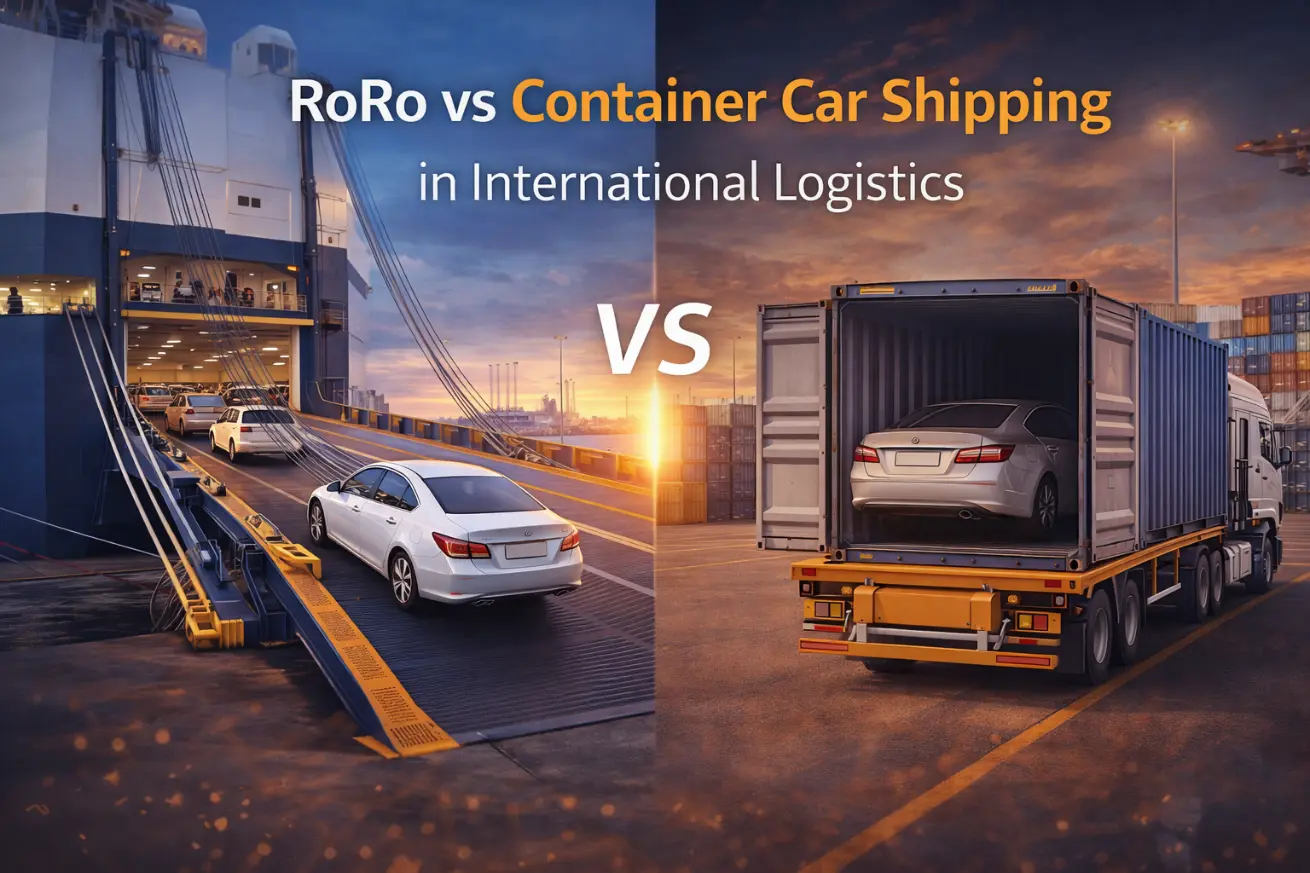
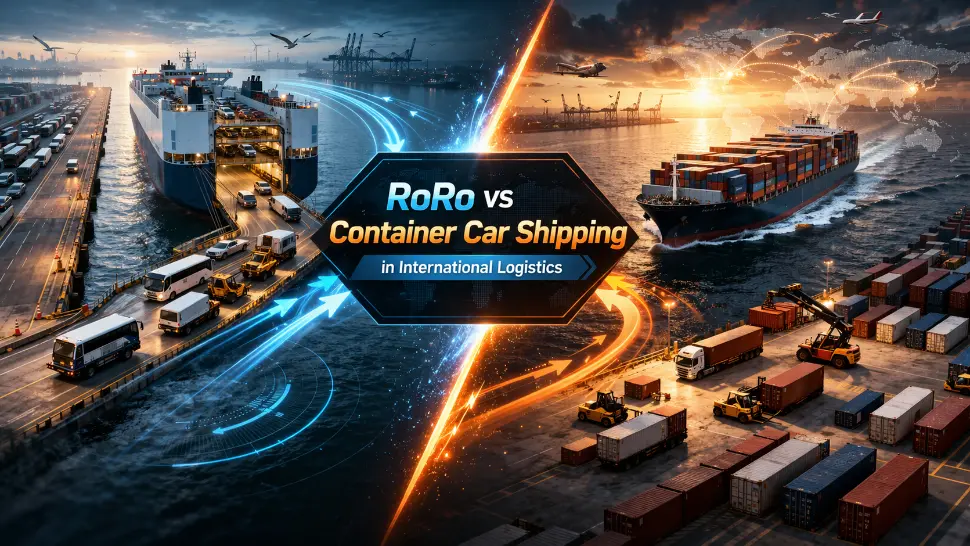
- Roll-on/Roll-off (RoRo) methodology. This method utilizes specialized vessels equipped with large ramps. Vehicles are driven directly onto the ship under their own power and parked on designated internal decks. Port handling involves driving the car into its stowage position and securing it to the deck with lashing straps. This process functions like a floating parking garage where the vehicle remains on its wheels throughout the entire maritime transit.
- Containerized vehicle shipping. This process involves loading the vehicle into a standard 20ft or 40ft steel shipping container. Once inside, the car is professionally lashed and braced to the container floor to prevent any shifting during the voyage. Shore-side cranes then lift the sealed container onto a standard cargo ship. This method provides a dedicated, enclosed space for the vehicle, isolating it from external port elements and other cargo.
The fundamental distinction lies in the loading process. RoRo uses ramps and driving maneuvers, while container shipping utilizes cranes and steel enclosures. These physical differences dictate the subsequent port handling procedures, lashing requirements, and the level of protection provided to the automotive cargo during the ocean leg of the transit.
How Do Freight Costs Compare for RoRo and Containers?
Financial planning for international vehicle transport requires a deep understanding of ocean freight rate structures. Logistics managers evaluate these two methods by comparing the flat-rate nature of container shipping against the variable volume-based pricing of RoRo. The final decision often rests on the total number of vehicles and the specific dimensions of the automotive cargo.
The primary cost drivers for these maritime logistics methods include:
- Cubic meter (CBM) calculations. RoRo carriers price shipments based on the total physical volume of the vehicle. This approach eliminates the need for container rental and specialized lashing labor, making it a budget-friendly option for single units or oversized machinery that exceeds container dimensions.
- Terminal handling charges (THC). Containerized freight involves specific port fees for crane operations and container movement. Shippers must also budget for the physical stuffing of the vehicle and the specialized equipment needed to secure the chassis inside the steel walls at the port of loading and discharge.
- FCL consolidation benefits. Using a 40ft high cube container allows for the consolidation of multiple vehicles into one unit. This strategy spreads the fixed ocean freight and terminal costs across several cars. For high-volume automotive distributors, FCL consolidation often results in a lower per-unit transport cost than individual RoRo rates.
Choosing RoRo avoids the labor-intensive packing phase, but it loses the economy of scale provided by containerization. Conversely, while container shipping involves more complex port handling procedures, the ability to lock in a single rate for a Full Container Load provides a predictable cost model for large-scale B2B inventory movements.
Which Shipping Method Offers Better Vehicle Security?
The physical security of high-value automotive cargo acts as a primary decision driver for B2B logistics managers. Protecting the vehicle chassis from environmental exposure and unauthorized access requires a specific containment strategy. While both methods involve rigorous lashing and strapping, the level of isolation provided to the cargo differs significantly.
The primary security factors influencing maritime vehicle transport include:
- Sealed environmental barriers. Container shipping provides a total physical shield against the harsh conditions of the open ocean. The vehicle remains locked inside a steel enclosure, protecting the exterior paint and internal electronics from saltwater corrosion, high-velocity winds, and debris. This method eliminates the risk of environmental degradation during long-haul maritime transit.
- Unauthorized access and theft. Containers are sealed with high-security bolts immediately after the vehicle is lashed. This creates a secure chain of custody where the vehicle remains untouched until it reaches the final destination port. In contrast, RoRo logistics requires leaving the keys inside the vehicle so port workers can drive it onto the vessel. This necessity increases the statistical risk of interior theft and unauthorized handling during the loading and discharge phases.
- Handling and lashing protocols. RoRo vehicles are exposed on open or semi-enclosed decks. While they are securely strapped to the ship floor, they remain accessible to port personnel throughout the voyage. Containerized shipping avoids these multiple human touchpoints. Once the car is strapped and the container doors are closed, the vehicle is never driven again until it clears customs at the port of discharge.
Logistics directors often prioritize containerized freight for high-value luxury cars, prototypes, or sensitive commercial inventory. The sealed nature of a steel container provides a level of risk mitigation that RoRo simply cannot match, despite the specialized deck lashing used on Roll-on/Roll-off vessels.
How Do Transit Times and Port Availability Differ?
Logistics planners must evaluate schedule reliability and physical port infrastructure when selecting a maritime transport method. The operational flexibility of a supply chain depends heavily on how often a vessel sails and whether the destination port possesses the mechanical capacity to handle the specific automotive cargo.
The table below outlines the exact operational constraints logistics managers face when routing international vehicles:
| Operational Factor | RoRo Shipping | Container Shipping |
| Port Accessibility | Limited to specialized RoRo terminals | Accessible at almost any commercial port |
| Sailing Frequency | Bi-weekly or monthly on specific lanes | Multiple weekly departures globally |
| Loading Equipment | Uses internal vessel ramps | Requires heavy-duty port cranes |
| Inland Connectivity | Requires driving to/from the port | Full intermodal (Rail/Truck) integration |
Standard container vessels operate on highly frequent, global sailing schedules. Almost every commercial port in the world possesses the standard gantry cranes required to lift 20ft and 40ft steel boxes.
This universal infrastructure allows logistics managers to book multiple weekly departures. It minimizes wait times at the port of loading and accelerates the overall transit schedule for high-volume automotive shippers.
Conversely, Roll-on/Roll-off operations require specialized port infrastructure. The port of discharge must feature a dedicated RoRo terminal with specific ramp configurations to allow vehicles to drive off the vessel safely.
This structural requirement severely restricts the number of available destination ports. As a result, RoRo vessels operate on specific, predetermined trade lanes with less frequent sailings, which can significantly extend overall transit times if a route lacks available vessel space.
International Vehicle Logistics and Port Handling by MSI-Trans
MSI-Trans manages the complete automotive supply chain by integrating maritime freight with a robust road transport network. Moving vehicles across international borders requires a synchronized approach that combines ocean vessel booking with precise inland delivery schedules. The operations team focuses on minimizing port dwell times and optimizing the movement of every car through the following technical services:
- Integrated intermodal transport. The logistics framework connects major ocean ports directly to inland distribution centers. MSI-Trans utilizes a specialized fleet of car carriers to provide door-to-door delivery for both individual luxury vehicles and large-scale commercial inventory. This eliminates the need for multiple third-party handlers and simplifies the chain of custody.
- Strategic customs brokerage. Exporting and importing vehicles involves complex regulatory documentation. The MSI-Trans brokerage team manages every technical requirement, including the verification of chassis numbers, title clearances, and tax declarations. Proper administrative preparation prevents costly impoundment at the port of discharge and facilitates rapid cargo release.
- Expertise in port handling. Whether utilizing RoRo ramps or containerized lashing, port operations require precise execution. MSI-Trans supervises the entire loading process to prevent handling damage. The team manages the physical strapping of cars inside containers and oversees the driving protocols for Roll-on/Roll-off vessels, providing a secure transit environment from the terminal to the vessel deck.
RoRo vs Container Car Shipping FAQs
What does the term RoRo stand for in ocean freight?
The term RoRo stands for Roll-on/Roll-off. It refers to a specialized maritime logistics method where vehicles are driven directly onto the vessel decks using ramps, rather than being lifted by cranes or packed into containers.
Can personal items be packed inside a vehicle during RoRo shipping?
Standard RoRo shipping protocols typically forbid the inclusion of personal items or loose cargo inside the vehicle. This restriction exists due to increased theft risks at the port and strict customs regulations that require every item on the vessel to be documented for security and tax purposes.
How many vehicles can fit inside a standard 40ft high cube container?
A standard 40ft high cube container can usually accommodate three to four passenger vehicles depending on their exact dimensions. Logistics providers often utilize specialized wooden or steel racking systems to safely stack the cars and maximize the internal volume of the container.
What is the process for strapping and securing cars in a shipping container?
Securing a vehicle inside a container involves a technical process called lashing. Technicians use heavy-duty nylon straps to anchor the wheels or chassis to the D-rings on the container floor. Wooden wheel chocks are then bolted to the floor to prevent any lateral or longitudinal movement during the voyage.
Are customs clearance procedures different for RoRo versus containerized cargo?
The core customs requirements for vehicle identification are similar for both methods. However, containerized shipments require a more detailed packing list and a specific container manifest. Customs officials may also decide to physically unseal and inspect a container, whereas RoRo vehicles are usually inspected individually on the port deck.
Why do some destination ports only accept containerized vehicle shipments?
Many smaller or older commercial ports lack the dedicated deep-water berths and specialized ramp infrastructure required to dock a large RoRo vessel. Because these ports already possess gantry cranes for standard cargo, they can only process vehicles that arrive inside intermodal containers.
How is the bill of lading processed for consolidated vehicle containers?
When multiple vehicles share a single container, the carrier issues a master bill of lading for the entire unit. The logistics provider then issues individual house bills of lading to each specific vehicle owner. This documentation allows each car to be cleared and released separately upon arrival at the destination port.
What happens if a vehicle battery dies before RoRo port loading?
If a battery dies, the port terminal staff must either jump-start the vehicle or use specialized towing equipment to move it onto the ship. This intervention usually results in additional handling fees and can cause delays in the loading schedule if the vehicle remains immobilized for a long period.
Does ocean freight insurance cover the exact same risks for both shipping methods?
Ocean freight insurance follows the same general principles for both methods, but the risk profiles differ. Containerized insurance premiums often reflect the lower risk of theft and environmental damage, while RoRo policies focus more on the risks associated with open-air port handling and exposure to salt spray.
How does MSI-Trans manage port handling for international automotive transport?
MSI-Trans provides comprehensive port management by supervising the entire loading and lashing process. The operations team coordinates the timing of inland delivery to the terminal, manages all customs documentation, and ensures that every vehicle is secured according to international maritime safety standards.