


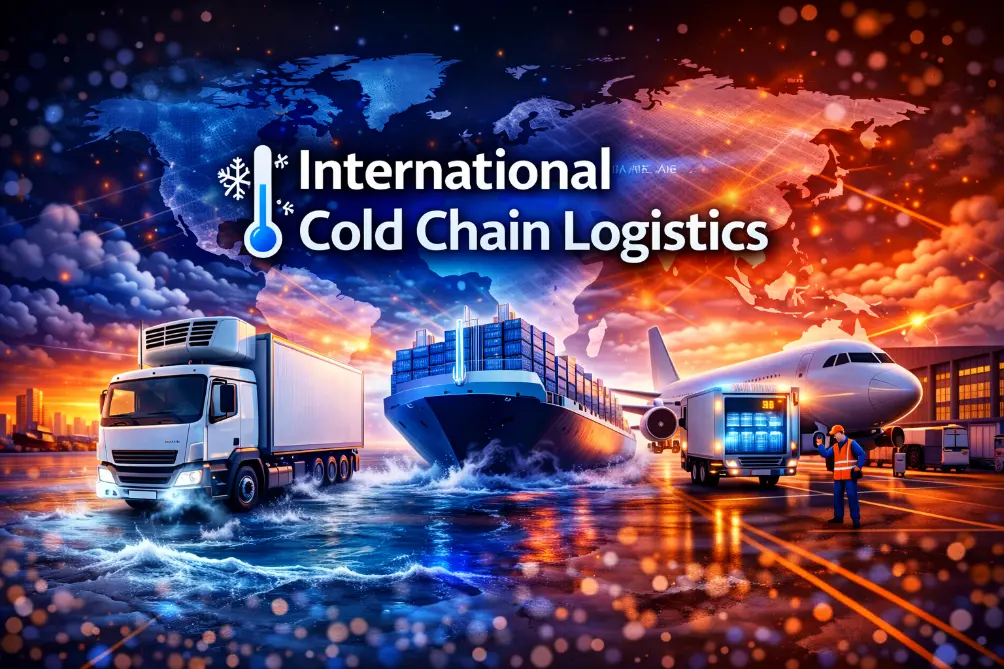
Managing perishable goods across international borders requires a highly specific operational approach. The cold chain logistics category possesses a unique transport profile characterised by severe temperature sensitivities and complex thermal regulatory frameworks.
Logistics managers frequently face massive cargo spoilage due to cooling equipment failures or prolonged customs delays for these highly sensitive materials. MSI-Trans provides a secure, fully compliant temperature-controlled model to solve this exact problem. This streamlined pathway combines rigorous real-time datalogger tracking with premium refrigerated freight execution across the UK, Austria, and Hungary.
What is Cold Chain Logistics?
The physical movement of perishable goods requires a highly technical, uninterrupted thermal environment. Cold chain logistics involves managing a continuous, temperature-controlled supply chain that spans directly from the initial production facility to the final delivery destination. This network relies entirely on mechanical cooling systems and thermal insulation to prevent organic degradation.
Maintaining product integrity stands as the primary objective of this logistics branch. When handling sensitive agricultural yields, frozen foods, or temperature-dependent chemical compounds, the physical cargo must remain within an exact thermal range. A deviation of just a few degrees triggers irreversible bacterial growth or chemical breakdown, resulting in total cargo loss.
Unlike standard dry freight, this specific logistics sector demands highly specialized equipment to function legally and safely. The mandatory operational components include:
- Refrigerated transport units. Heavy freight moves via frigo trucks and reefer trailers equipped with active mechanical cooling systems. These units actively pump cold air through the cargo space to counteract outside environmental heat and maintain a strict internal climate.
- Specialized thermal packaging. Passive cooling relies heavily on engineered insulation materials. Shippers utilize insulated pallet covers, gel packs, and phase change materials to create a localized thermal barrier around the specific cargo, protecting it during loading and unloading phases.
- Continuous temperature monitoring. Modern operations depend entirely on digital dataloggers. These tracking devices record the exact ambient temperature inside the trailer at regular intervals, providing an undeniable data trail for customs officials and final receivers to verify that no thermal breaches occurred.
What Are the Standard Temperature Ranges in the Cold Chain?
Managing perishable goods requires absolute precision regarding thermal zones. Logistics managers must assign the correct temperature range to every single shipment to maintain product viability. Assigning the wrong thermal profile leads directly to rejected cargo at the final destination.
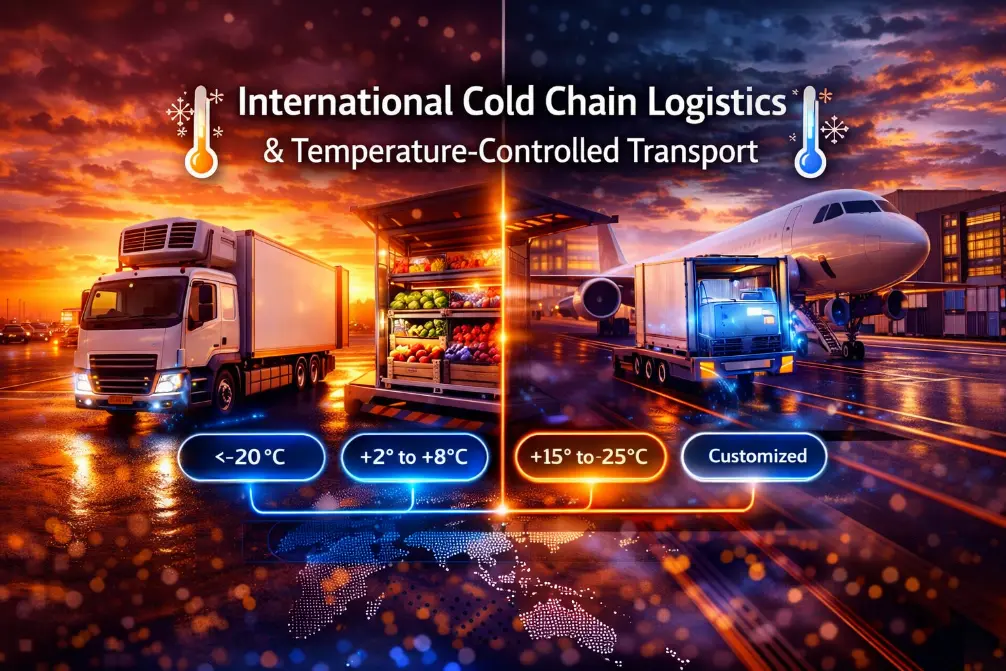
The B2B supply chain relies on four primary temperature classifications to safely transport sensitive materials across international borders. The operational breakdown of these standard thermal environments includes:
- Deep freeze environments. This highly restrictive zone operates between -25°C and -30°C. Heavy industrial supply chains utilize this extreme thermal setting for highly sensitive organic materials, deep-sea seafood cargo, and specialized biological components requiring total metabolic suspension.
- Standard frozen settings. Operating strictly around -18°C, this is the most common temperature profile for the global food industry. B2B freight operations handle massive volumes of frozen poultry, processed meats, and commercial bakery dough within this thermal bracket.
- Chilled requirements. This highly monitored zone maintains a strict climate between +2°C and +8°C. Fresh agricultural produce, dairy products, and high-value temperature-controlled medical logistics rely entirely on this setting. Medical supply chains transport vital serums, generic biological samples, and base active pharmaceutical ingredients within this narrow window to prevent cellular degradation.
- Controlled Room Temperature (CRT). This profile stabilizes the cargo environment between +15°C and +25°C. Industrial operations utilize CRT for sensitive cosmetics, highly reactive chemical reagents, and specific manufacturing adhesives that lose structural integrity during extreme heat or freezing conditions.
How Does Temperature-Controlled Transportation Work?
The physical mechanics of the transport phase dictate the survival of perishable cargo. International freight operations execute temperature control through highly engineered mechanical systems and advanced insulation technology. Moving sensitive materials requires logistics managers to choose the exact thermal preservation method based on the transit duration and the specific vulnerability of the product.
The primary operational mechanisms fall into two distinct categories: active cooling and passive thermal packaging. The table below outlines the structural differences between these critical supply chain methodologies:
| Technical Feature | Active Cooling (Frigo Units) | Passive Thermal Packaging |
| Cooling Mechanism | Mechanical refrigeration pumping cold air | Engineered insulation and phase change materials |
| Ideal Freight Volume | FTL and high-volume LTL shipments | Smaller, highly sensitive individual parcels |
| Power Dependency | Requires continuous fuel or electrical power | Entirely independent of external power sources |
| Transit Duration | Unlimited (provided fuel is supplied) | Strictly limited by the thermal lifespan of gel packs |
How Do Active Refrigeration Units Work in Frigo Trailers?
Frigo trailers utilize heavy-duty diesel or electric refrigeration units mounted directly onto the insulated cargo box. These active systems continuously draw in ambient air from the trailer, push it across freezing evaporator coils, and blast the chilled air back over the freight. The system constantly reads the internal temperature and cycles the compressor automatically to maintain the strict environmental parameters assigned by the logistics team.
When Should Shippers Use Passive Thermal Packaging?
When shipments do not require a massive frigo truck, shippers deploy localized thermal barriers. Insulated pallet shippers, heavy-duty polystyrene boxes, and advanced vacuum insulated panels surround the sensitive cargo. The logistics team introduces phase change materials, such as specific gel packs or dry ice, directly into the packaging. These materials absorb the ambient heat penetrating the box, keeping the internal core completely stable until they melt or sublimate.
Why Are Dataloggers Mandatory for Temperature Control?
A functional cooling unit means nothing without absolute proof of performance. International receivers require undeniable evidence that no thermal breaches occurred during long transit routes. Supply chains utilize digital dataloggers placed directly inside the cargo pallets. These devices record the exact ambient temperature minute by minute. Upon arrival, the logistics manager downloads the electronic data trail to verify compliance and prevent costly cargo spoilage claims.
What Are the Biggest Challenges in Cross Border Cold Chain?
Moving perishable goods across international borders introduces severe operational vulnerabilities. The intersection of strict temperature requirements and complex customs bureaucracy creates a highly fragile logistics environment. A single point of failure within the network results directly in catastrophic financial losses and ruined cargo.
Refrigerated trailers rely entirely on continuous power and functional compressors. If a frigo unit fails during a long-haul transit route, the internal temperature rises rapidly. Without immediate intervention or backup cooling systems, the entire payload spoils before reaching the final destination.
Border control agencies introduce the highest level of risk to the thermal environment. Customs officials frequently mandate physical inspections of agricultural or biological shipments. Opening a refrigerated container at a border checkpoint instantly exposes the sensitive cargo to ambient outside temperatures. This triggers a dangerous thermal spike that digital dataloggers immediately record, potentially rendering the goods unusable upon arrival.
Precise documentation acts as the only defense against prolonged border holding. Shipping perishable food or organic materials requires highly specific paperwork, including phytosanitary certificates and official health declarations. Missing a single stamp or submitting an incorrect commercial invoice forces customs to impound the freight. The cargo sits in a holding warehouse until the paperwork clears, which usually guarantees total product degradation and a complete loss of revenue for the shipper.
Refrigerated Road Transport Solutions by MSI-Trans
Managing complex cold chain logistics requires a partner with deep operational infrastructure and a flawless compliance record. MSI-Trans provides highly engineered solutions for the temperature-controlled supply chain, designed specifically for high-volume B2B food and chemical logistics.
To guarantee highly sensitive cargo moves across borders securely, MSI-Trans executes operations through the following logistics framework:
- An expansive modern frigo fleet. The company operates heavy-duty trucks equipped with advanced active cooling units. This physical capacity allows the logistics team to execute both dedicated FTL reefer freight and highly monitored LTL refrigerated transport without waiting for consolidated space.
- Real-time datalogger tracking. Total visibility acts as the foundation of perishable goods logistics. MSI-Trans integrates digital tracking systems directly into every transport unit. Logistics managers can monitor the exact thermal profile of their cargo minute by minute from the loading dock to the final receiver.
- Strategic European route dominance. The team manages high-frequency refrigerated routes connecting Turkey directly to the UK, Austria, and Hungary. Dedicated route planning minimizes transit times and navigates complex customs bottlenecks to protect the thermal lifespan of every single shipment.
Cold Chain Logistics FAQs
What components make up a cold chain logistics network?
A functional cold chain network consists of temperature-controlled storage facilities, specialized refrigerated transport units such as frigo trucks, and advanced thermal tracking technology to maintain product stability from production to delivery.
How is temperature monitored during refrigerated transport?
Logistics teams utilize digital dataloggers and integrated telematics systems placed directly inside the cargo area. These devices record the exact ambient temperature at regular intervals, providing a verifiable data trail for the entire transit duration.
What is the difference between active and passive cold chain packaging?
Active packaging relies on mechanical refrigeration units that consume fuel or electricity to pump cold air, while passive packaging utilizes engineered insulation and phase change materials like gel packs to maintain a localized thermal barrier.
Which industries rely most on temperature-controlled logistics?
The primary sectors requiring these services include the international food and beverage industry, fresh agricultural producers, specialized chemical manufacturing, and the medical supply chain handling biological samples or active pharmaceutical ingredients.
How do customs delays affect perishable goods?
Prolonged customs delays at international borders increase the risk of temperature excursions. If a shipment sits in a holding area beyond its thermal lifespan or if cooling equipment fails during the wait, the cargo often suffers total organic degradation.
What happens if there is a temperature excursion during transit?
A temperature excursion triggers an immediate safety review. The digital datalogger records the breach, and the final receiver typically rejects the cargo if the deviation exceeds the strict safety parameters defined for that specific product.
Does MSI-Trans provide FTL and LTL refrigerated transport?
Yes, MSI-Trans manages both full truckload (FTL) reefer freight for large industrial volumes and less than truckload (LTL) refrigerated transport for smaller shipments requiring high-frequency movement across European corridors.
What documents are mandatory for international food logistics?
International food shipments require a complete set of paperwork including the commercial invoice, packing lists, official phytosanitary certificates for plant products, and health declarations issued by national agricultural authorities.
How are frigo trucks maintained for international routes?
Refrigerated transport units undergo frequent mechanical audits focused on compressor health, coolant levels, and door seal integrity. Logistics providers also calibrate temperature sensors regularly to guarantee the accuracy of the climate control data.
How can businesses request a refrigerated freight quote from MSI-Trans?
Businesses can secure an accurate quote by contacting the MSI-Trans operations department directly with the specific temperature requirements, total cargo volume, pick-up location, and the final destination details for the shipment.